
If you wanted to know whether exercise during menopause was helpful or safe you may be disappointed, as most of the research regarding the impact of exercise on our health has been done on men – because women are less consistent study subjects due to their fluctuating hormones. And those fluctuations are greatest at times of significant physical change for women – at puberty, throughout and after pregnancy, and in the lead up to menopause (perimenopause). After menopause, one of the most well known hormones, oestrogen, stops its fluctuations and settles at a much lower point than pre-menopause. This
can cause significant changes to women’s health and wellbeing – including a significant decrease in bone density and muscle mass, sleep issues and hot flushes. Thankfully, more research is being conducted in this important area and showing very promising results.
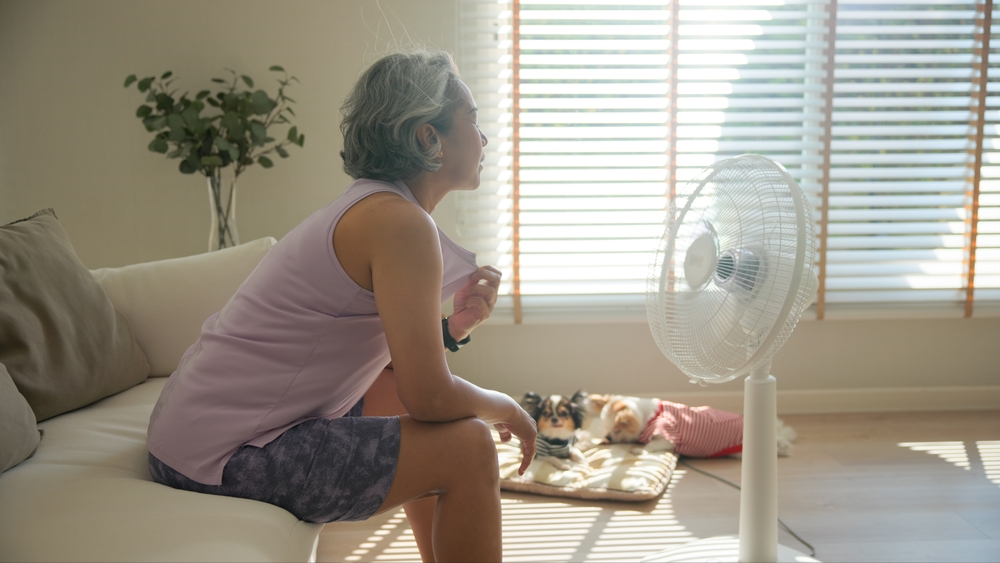
Hot flushes
Hot flushes/flashes are caused by the sudden dilation of blood vessels, leading to a feeling of heat and sweating – and it can happen during the night too. This is a common and uncomfortable symptom of menopause. Research has shown that participating in yoga can help with managing this symptom. Interventions included in the studies ranged from 8 weeks to 4 months, and included a combination of yoga postures and meditation. There is insufficient evidence to give exact guidelines about the type of yoga that would be most suitable, as there is a large variation in the different styles – but we have a yoga class at our Knox clinic that could be worth trying!
Bone density
Bone mineral density (BMD) increases throughout the first part of a woman’s life, peaking in her 20’s and maintained until early-mid 30’s. Then it begins to gradually decline, until peri-menopause, when there is a significant increase in the decline. This is a problem because as our bone density declines, our risk of fractures increases. In a recent study, nearly one quarter of late-peri-menopausal women had their bone density categorised as osteopenic, which is a stage of declining BMD before osteoporosis. This study noted that activities such as walking were insufficient to improve bone health. However – all is not lost. High impact exercise can reduce the decline of BMD. If that sounds intimidating, it doesn’t have to be! An Accredited Exercise Physiologist can help you create an exercise program that includes impact exercises, and it might even be fun – another study found improved BMD, muscle mass and grip strength for post-menopausal women who completed 24 weeks of an aerobic dance program.
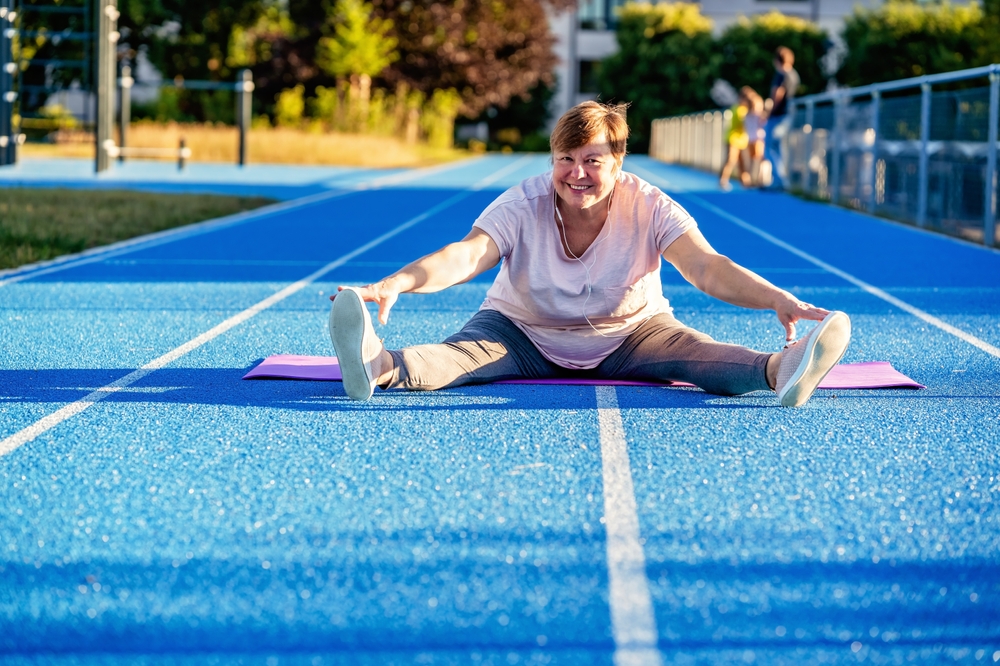
Sleep problems
Problems with sleep can involve difficulty falling asleep, waking during the night, and overall shortened sleep duration. Exercise can help here too: one systematic review found that 2-3 exercise sessions a week for 70-90 minutes each for at least two months improved sleep disturbances. Types of exercises included in the studies included cycling, jogging, yoga and Pilates – so if you book in to a couple of our Pilates classes at our Knox, Emerald or Rowville clinics, you’ll already be well on your way to meeting the weekly recommended exercise duration.
If you’re unsure of where to get started with using exercise as a tool to help you manage the symptoms of peri-menopause or menopause, our Accredited Exercise Physiologist Louise can help you make a plan.
References
Sipilä, S., Törmäkangas, T., Sillanpää, E., Aukee, P., Kujala, U. M., Kovanen, V., & Laakkonen,
E. K. (2020). Muscle and bone mass in middle-aged women: Role of menopausal status and
physical activity. Journal of Cachexia, Sarcopenia and Muscle, 11(3), 698–709.
https://doi.org/10.1002/jcsm.12547
Yu, P.-A., Hsu, W.-H., Hsu, W.-B., Kuo, L.-T., Lin, Z.-R., Shen, W.-J., & Hsu, R. W.-W. (2019).
The effects of high impact exercise intervention on bone mineral density, physical fitness, and
quality of life in postmenopausal women with osteopenia: A retrospective cohort study.
Medicine, 98(11), e14898. https://doi.org/10.1097/MD.0000000000014898
Jing, Y., Liu, M., Tang, H., Kong, N., Cai, J., & Yin, Z. (2024). The effect of aerobic exercise on
sleep disorder in menopausal women: A systematic review and meta-analyses. BMC Women’s
Health, 24(1), 635. https://doi.org/10.1186/s12905-024-03477-2
Shepherd-Banigan, M., Goldstein, K. M., Coeytaux, R. R., McDuffie, J. R., Goode, A. P.,
Kosinski, A. S., Van Noord, M. G., Befus, D., Adam, S., Masilamani, V., Nagi, A., & Williams, J.
W., Jr. (2017). Improving vasomotor symptoms, psychological symptoms, and health-related
quality of life in peri- or post-menopausal women through yoga: An umbrella systematic review
and meta-analysis. Complementary Therapies in Medicine, 34, 156–164.
https://doi.org/10.1016/j.ctim.2017.07.007